

OCM October Market Update
Has gold topped? It’s a question many in the industry are asking themselves as gold continues to see pressure from inflation and higher rates.
“Betteridges Law”, states that “any headline that ends in a question mark can be answered by the word no”, will understand our biased position.
Overall fund flows into the sector and Incrementum’s chart, included below, citing that private gold allocation was only 2.70% at the end of 2025 indicates to us that we’re still far away from the bottom of the 9th inning in this gold market.
Gold Allocation – Still Low
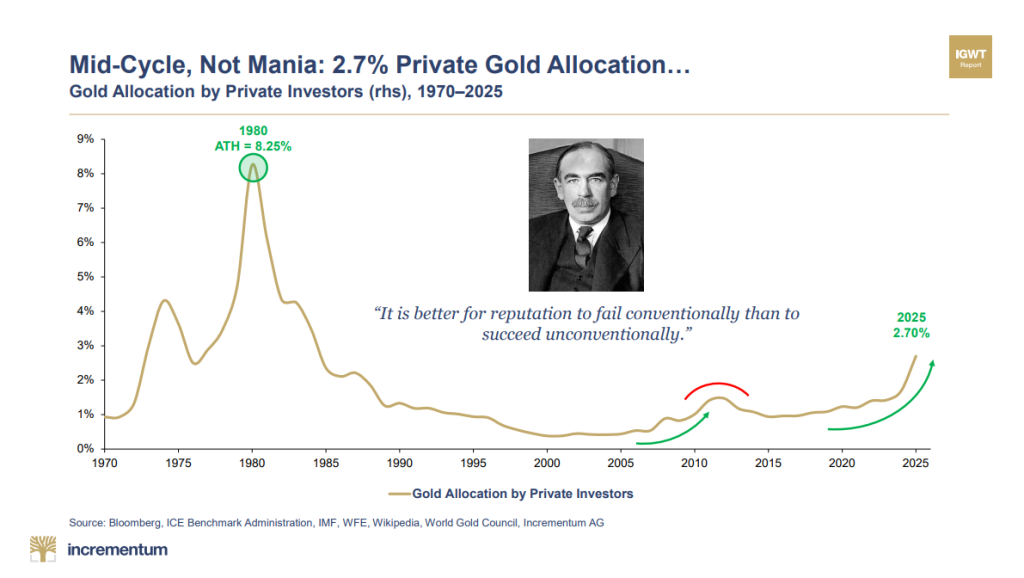
As we highlighted in the September edition of the OCM Perspective, allocations to gold are not close to previous highs. Since 2022, most gold demand has been due to central bank buying, which continues to prove strong quarter over quarter.
Interest as Percentage of GDP
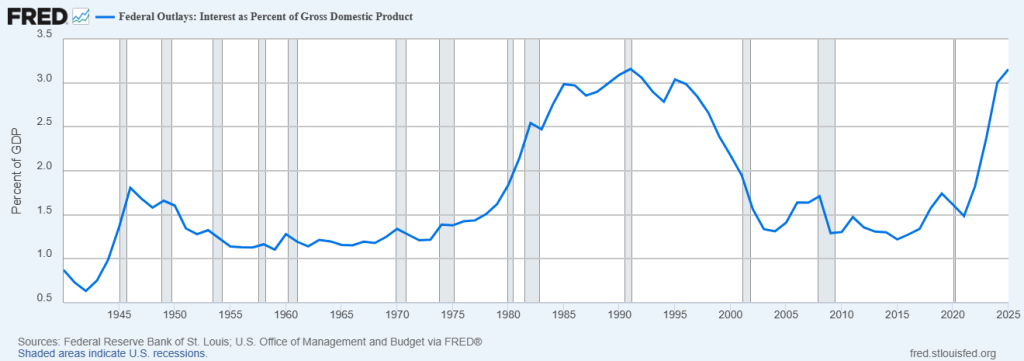
This FRED chart is annual data and thus ends in 2025. At the end of 2025, the government’s interest payments as a percentage of GDP was 3.153%. 2025’s figure was the highest since 1991 when it was 3.157%. One major difference between 1991 and today was the federal debt outstanding was only $3.66 trillion, or 11 times less than today’s current figure. With the current federal funds rate 25 bps higher than it was at the end of 2025, this figure will most likely be even higher in 3 months.
AI Circular Financing Repeating History
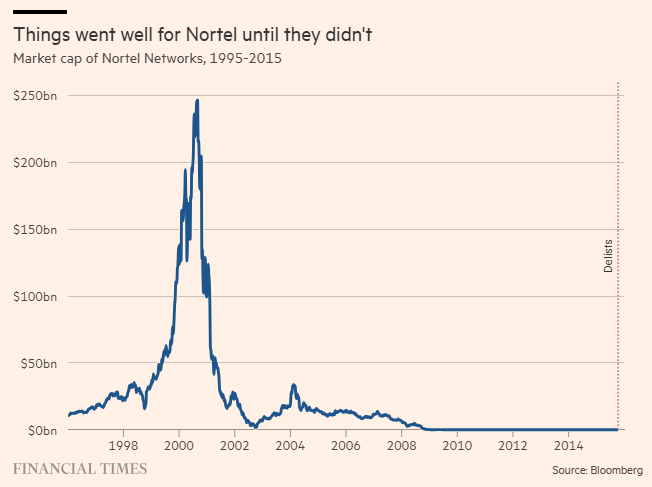
From Toby Nangle of the Financial Times: “
“The parallel with the telecommunications boom of the late 1990s is instructive: upstream equipment vendors such as Lucent and Nortel financed network operators so that the operators could buy the vendors’ equipment. This meant that part of the equipment vendors’ reported sales was being funded by the vendors themselves. For a time, as operators expanded their networks, equipment orders also expanded and vendors booked both the sales and loans as assets.
However, when operators’ own revenues failed to materialise or slowed, they could neither repay the loans nor sustain the equipment purchases. Equipment vendors then sustained both financial losses and a loss of sales. Such dynamics may also play out in AI if revenue growth and end user demand fall short of firms’ expectations.”
We recommend the entire article for further reading about the circular nature of AI financing. Thank you to Jesse Felder for highlighting the article for us.
Concentration Issues – Not ADHD
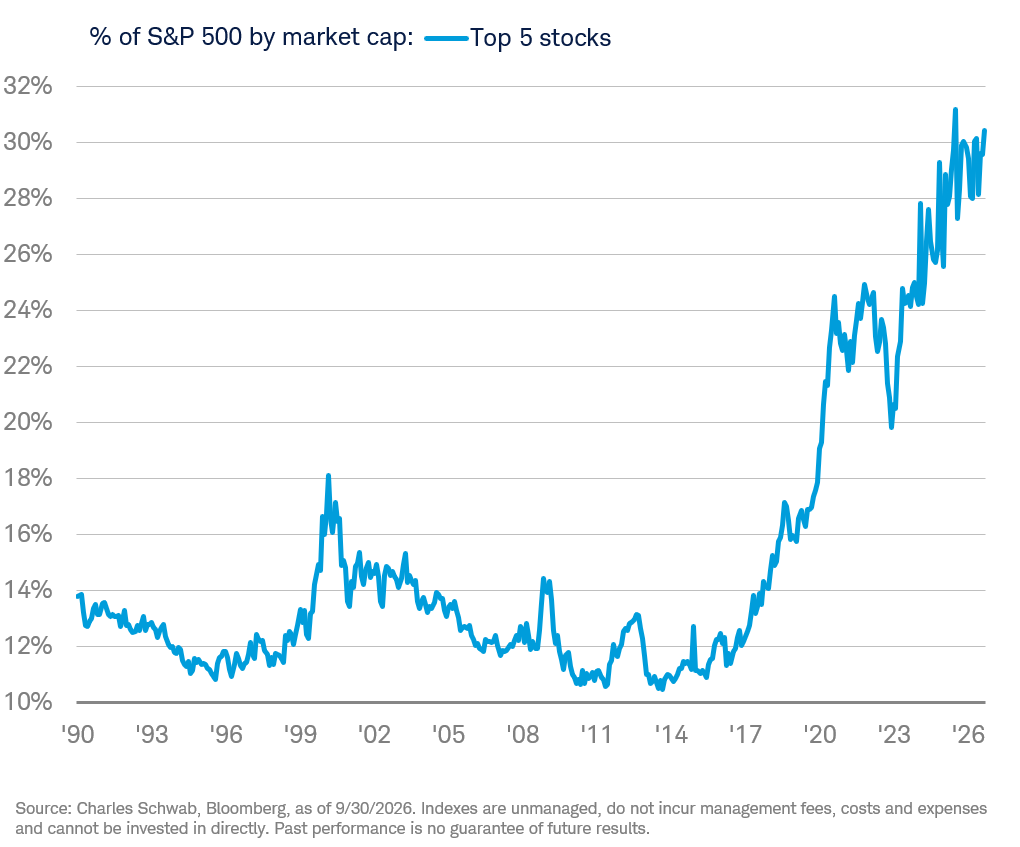
Per Charles Schwab, the S&P 500 has never seen the top 5 stocks hold a higher weighting than the last few years.
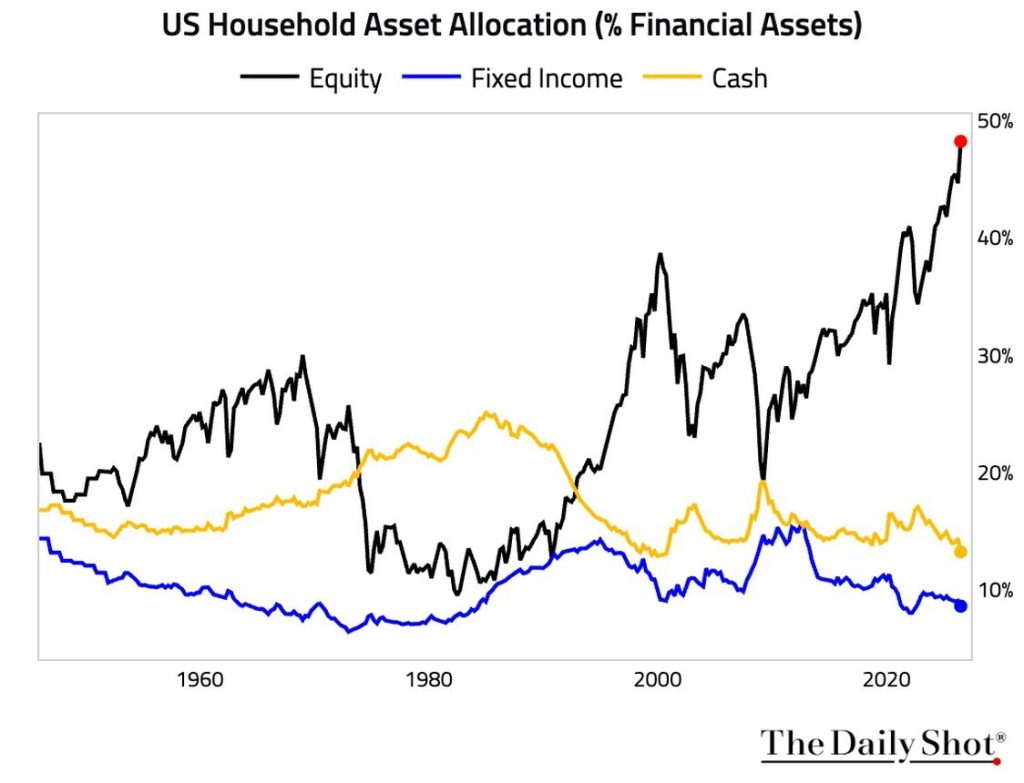
Meanwhile, per the Daily Shot, U.S. households have never had such a high concentration of their assets in equities.
This presents two thoughts for us. Firstly, this is another example of how small the allocation to gold and gold assets truly is. Newmont is the only gold mining equity in the S&P 500. Secondly, these two charts combined illustrate the high level of risk due to the current lack of market breadth. Unlike anytime in the modern market era has the U.S.’s economy been tied to the top 5 stocks in the country. Should there be a market sell off of any kind, the inverse wealth effect will hit deeper than anytime in any market participant’s memory.
Important Disclosures
Investors should carefully consider the investment objectives, risks, charges, and expenses of the OCM Gold Fund. This and other important information about a Fund are contained in a Fund’s Prospectus, which can be obtained by calling 1-800-779-4681. The Prospectus should be read carefully before investing.
The Fund invests in gold and other precious metals, which involves additional risks, such as the possibility for substantial price fluctuations over a short period of time and may be affected by unpredictable international monetary and political developments such as currency devaluations or revaluations, economic and social conditions within a country, trade imbalances, or trade or currency restrictions between countries. The prices of gold and other precious metals may decline versus the dollar, which would adversely affect the market prices of the securities of gold and precious metals producers. The Fund may also invest in foreign securities which involve greater volatility and political, economic, and currency risks and differences in accounting methods. The Fund is non-diversified, meaning it may concentrate its assets in fewer individual holdings than a diversified fund. Therefore, the Fund is more exposed to individual stock volatility than a diversified fund. Prospective investors who are uncomfortable with an investment that will fluctuate in value should not invest in the Fund.
Past performance is no guarantee of future results
There is no guarantee that the Fund will achieve its objective. Diversification does not ensure a profit or guarantee against loss. The prices of securities of gold and precious metals producers have been subject to substantial price fluctuations over short periods of time and may be affected by unpredictable international monetary and political developments, such as currency devaluations or revaluations, economic and social conditions within a country, trade imbalances, or trade or currency restrictions between countries. The prices of gold and other precious metals may decline versus the dollar, which would adversely affect the market prices of the securities of gold and precious metals producers. Because the Fund concentrates its investments in the gold mining industry, a development adversely affecting that industry (for example, changes in the mining laws which increase production costs) would have a greater adverse effect on the Fund than it would if the Fund invested in a number of different industries.
Funds are distributed by Northern Lights, LLC, FINRA/SIPC. Orrell Capital Management, Inc. and Northern Lights Distributors, LLC are not affiliated.
20261028-6061447